
Teaching
Currently —
Yale University
Graduate School of Arts & Sciences
Columbia University
School of Engineering & Applied Science
Ivy International
Students Worldwide
Between 1982-2003 I taught undergraduate and graduate courses in general and applied linguistics, composition, presentations, ESL, and second language pedagogy. Since 2003 I have focused my teaching on graduate courses for engineers, and short courses and workshops for research scientists and professionals in science, engineering, the humanities, and business. I teach my courses and workshops at Columbia University School of Engineering and Applied Science, NYU School of Medicine, NYU Center for Data Science, University of California at Santa Barbara College of Engineering, The Values Institute at New York-Presbyterian Hospital, NYU Neuroscience Institute.
Some of the courses and workshops I teach:
- Academic Writing
- Great Presentations
- Scientific Writing for Physicians and Medical School Students
- Pronunciation of English
- Writing for Environmental Professionals
- Writing Research Manuscripts
- Communication Skills for Non-Native Speakers of English
- Job Talks
- Writing and Presenting One-on-one Sessions
Distinguished Teaching Award
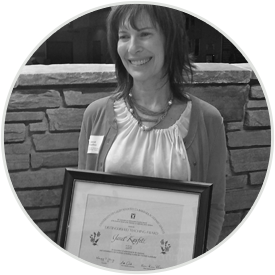
Awarded April 2013
UCSB Academic Senate
Media Releases
My Yale University & Columbia University
Courses for Ph.D. Students
Academic Writing
The Academic Writing course focuses on the fundamental ingredients of a clear, interesting, and rigorous science research paper. In addition to the central idea of rhetorical positioning and the significance of narrowing the problem space, we talk about the construction of logical arguments, strength of claim in the reporting of data, reader-oriented writing, precision, tone, grammatical usage, and editing strategies. We also focus on the development of content and fluency through practice with timed, unedited journal-type writing. Students work on a variety of subsections of a scientific text including introductions, data commentaries, results commentaries, conclusions, abstracts, and bio-data statements. A special feature of the coursework is the analysis and editing of student writing-in-progress. During each class session we spend time discussing and editing student texts that we project on a screen in front of the class. Students receive detailed feedback on their writing through this group editing activity as well as through peer-editing and individual conferences throughout the course.
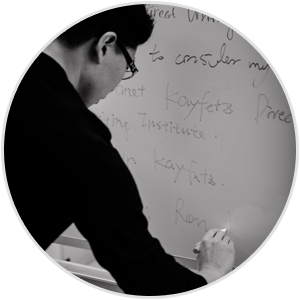
Communicative Purpose
Great Presentations
The guiding principle in the Great Presentations course is the refinement of each participant’s individual and unique speaking style and manner. We analyze the essential components of an excellent formal presentation including the development of the presentation story, the use of appropriate language and discourse for technical content, the best use of visuals, transitioning through the slides, coordination of movement with content, connection with the audience, timing, and fluency. We also look at job talks, interview sessions, and the art of asking and responding to questions. Students give individual talks of varying lengths from their research. Detailed feedback is given following each talk and listener preferences are discussed and evaluated. Each presentation is videotaped for student reference and review.

Walk, Stand, Breathe, Speak
Writing and Presenting One-on-One
Writing and Presenting One-on-One is a unique class for Ph.D. students and postdocs. All meetings are conducted as one-on-one individual conferences. There are no assignments — Participants work solely on their writing-in-progress and current presentation projects. Our goal is to produce excellent texts and presentations that meet specific deadlines.
For writing, we look at content, rhetorical positioning and audience, organizational logic, knowledge claims, style, tone, sentence level language, grammar, transitions, readability, clarity, rigor. For presentations, we look at the presentation story, positioning and organization, fit and balance of the content into the allotted time, visuals, delivery, pronunciation, responding to questions, personal style.
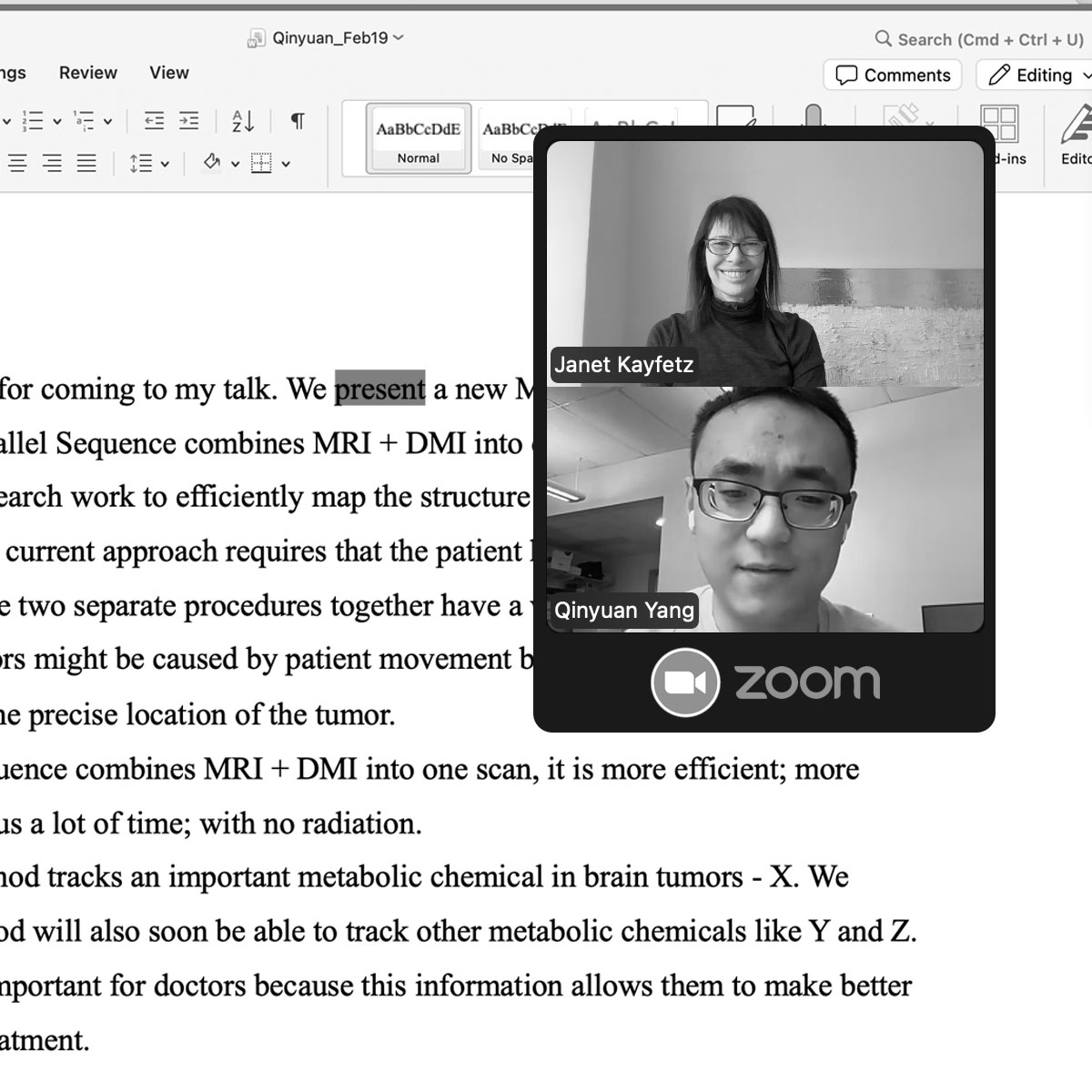
Conference Presentation
One-on-One Session
Columbia University